The Scott Dunn ORCHESTRA
Capturing a live orchestra on film without interrupting the recording
A conductor championing forgotten 1950s and 60s film scores needed promotional films of a live Britten Sinfonia session at Air Studios. We delivered seven in two weeks.
Snapshot
Client: The Scott Dunn Orchestra, with the Britten Sinfonia
Sector: Music and cultural preservation
Location: Air Studios, London
Delivered: Seven 5-minute films plus social media edits
The music was slipping
out of view
What we Produced
Scott Dunn conducts the film scores of the 1950s and 60s, music from East of Eden and A Streetcar Named Desire that once filled cinemas and is now rarely heard. He needed films that made the case for this work and presented him as the person to bring it back to a wider audience. We have filmed enough live performance to recognise the real problem on sight. The recording session runs to its own schedule, and the camera has to fit around the music, never the other way round.
This came in at the last minute, with a modest budget and barely any time to plan. We agreed an approach that would hold inside those limits before a single camera was set up.
We delivered seven 5-minute films and a set of social media edits inside the two weeks. The production values matched the music and the room it was recorded in, and each film stands on its own while also supporting the wider pitch Scott was building to take this music to a bigger platform. The client was very happy with the result.
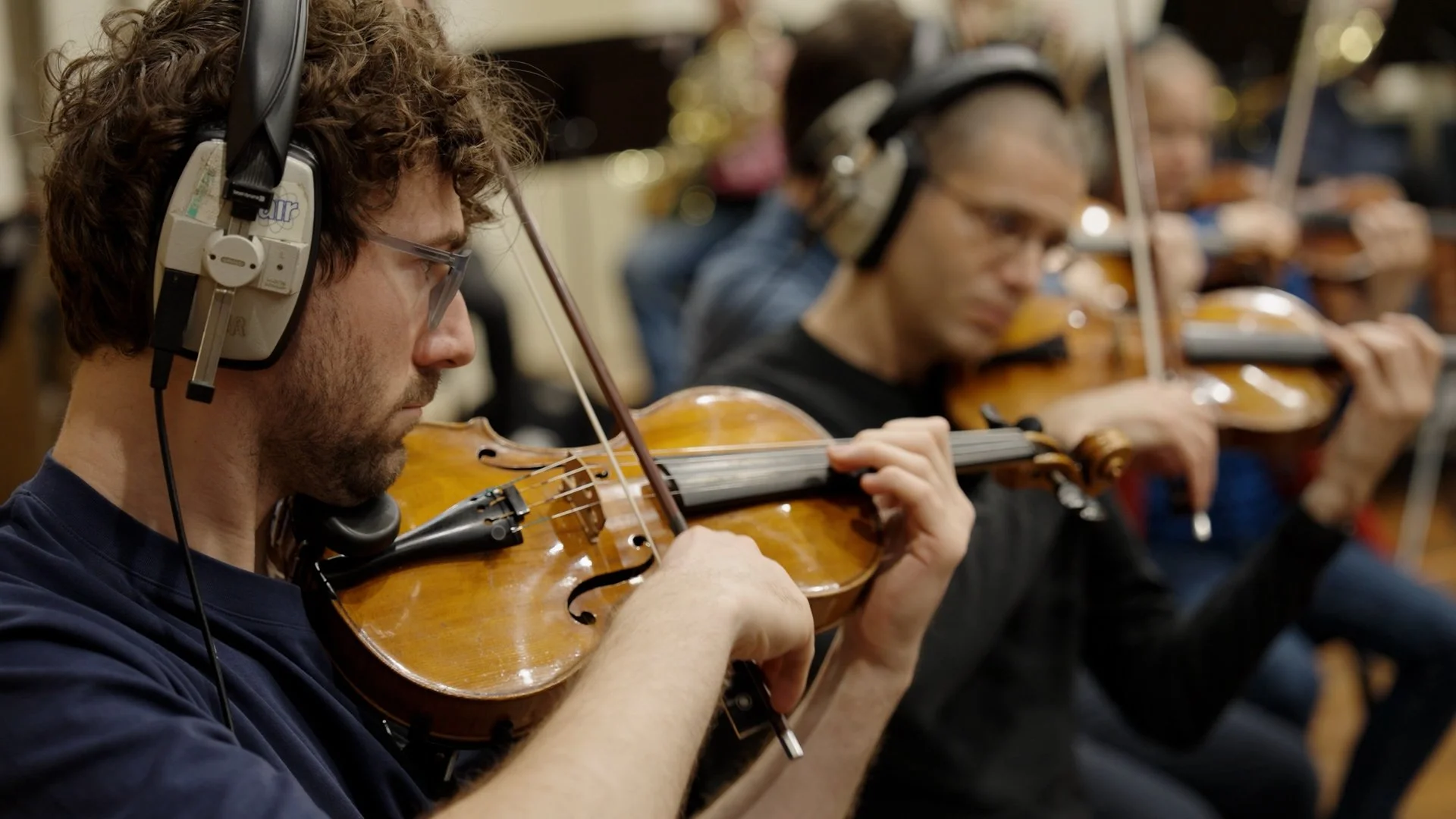
The Britten Sinfonia was recording each piece for a separate release, so there were several takes of every score and no way to ask for anything to be played again. We could move only between takes, never while the orchestra was playing. With a small camera team covering a full orchestra, every reposition had to count. Ian and Glenn worked through the room quietly, building quick understandings with the players by gesture during the takes and over conversation at lunch, so they could get in close for the intimate shots without putting anyone off their playing. Glenn spent ten minutes in the sound booth with the percussion section, and some of the best performance footage in the final edit came from there.
Filming inside a live recording session
Editing the film while we shot it
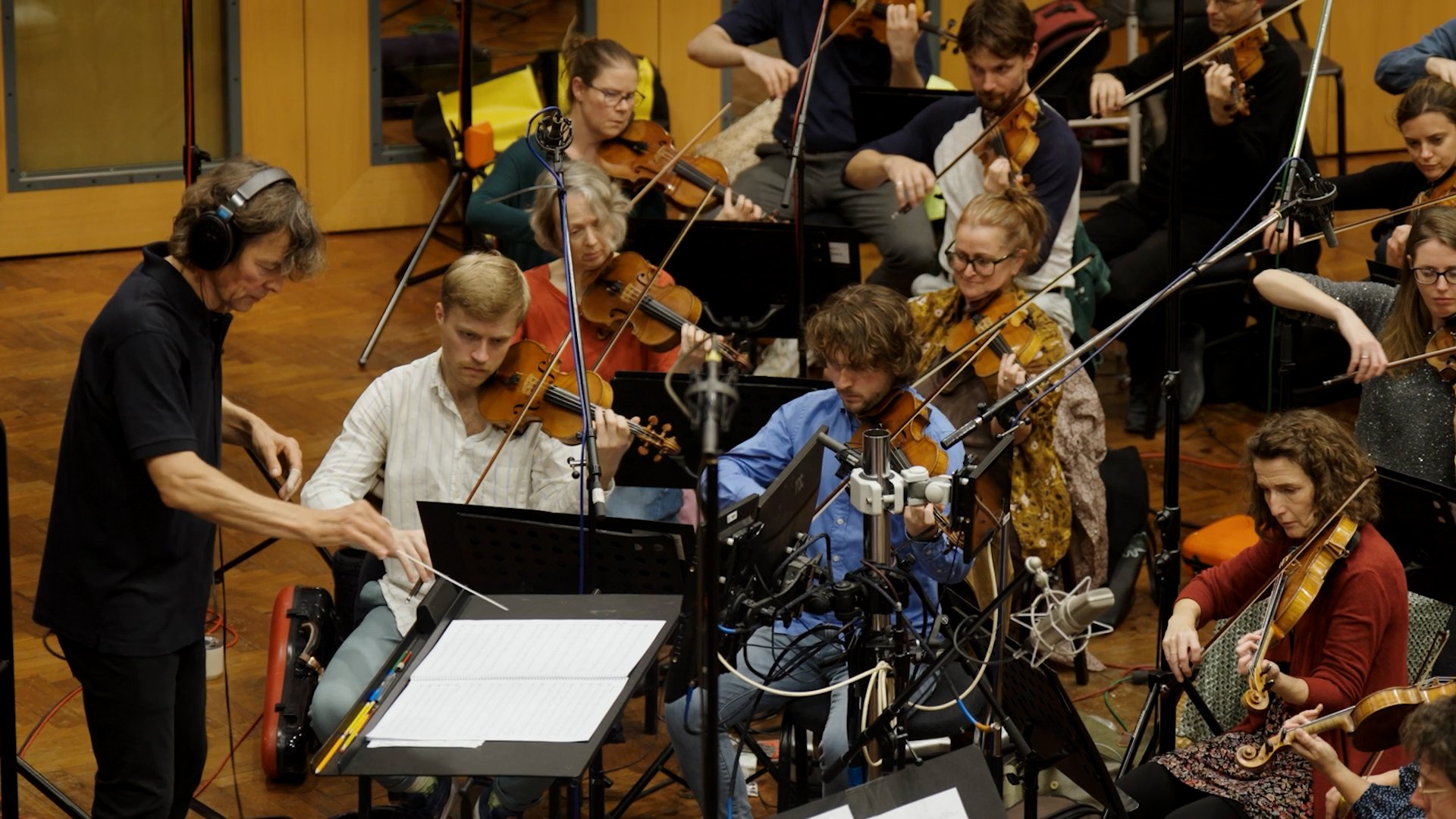
Working around takes we could not repeat meant holding the edit in our heads as we filmed. If a piece featured a trombone solo and we had not yet covered the trombone section, we had to catch it on the next take, because there might not be another. Every camera position was a decision about what the edit could not do without, weighed against what would only be useful to have. That judgment comes from having shot this kind of session many times before, not from a longer schedule or a bigger crew, neither of which this project had.
If you have a performance worth preserving
If you run an arts organisation or a cultural venue with a live performance you want to capture, the hard part is usually the same. The performance cannot pause for the camera, and the budget rarely stretches to a large crew. We are used to working inside both, and to handing back films that do justice to what happened in the room. If you have a performance coming up that deserves filming properly, book a discovery call and we will talk through how we would approach it.
Book a discovery call
Got a live performance coming up you want captured properly? Drop us a line at [email] or call [number], and we will talk through how we would film it.